COAT COLOURS AND LENGHT
RED: this is the original colour from the eastern provinces such as Trad, Chantaburi, and Rayong. Red dogs initially had medium-length coats, later bred to have short, smooth velvety coats. The bloodlines of this colour are more stable than any other, and puppies from two red parents consistently have larger and wider ridges compared to blue ones. The shades of red vary from light to dark red, called mahogany. Red colour dogs may have black mask and some black marks on their limbs and tail.
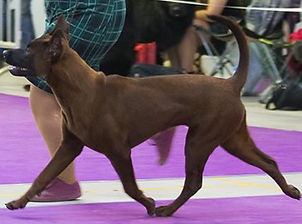


BLACK: black is a dominant base colour among Thai Ridgebacks. The coat is entirely black, giving it a glossy and healthy appearance. Their skin is dark blue/black, with black noses and nails. Despite being a dominant base colour, black Thai Ridgebacks are weaker talking about standards than red or blue ones. In Thailand, black is often considered unlucky, leading to less focus on breeding this colour, and it's more developed in Europe



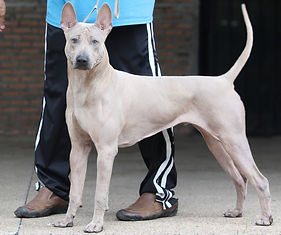
BLUE/SILVER: this colour was developed by Ruang Paripon Potchanapisut. The first generation of these dogs had long, black-grey coats ranging from molten silver to dark grey. Later, they were crossed with dogs from the Trad and Chantaburi provinces, resulting in today's Thai Ridgebacks with short, smooth velvety coats. The most common ridges for dogs of this colour are shaped like a lute or arrow.


ISABELLA: This colour results from crossing blue/silver and red dogs. Isabella can come in several shades: dark, light, greyish, and pinkish.


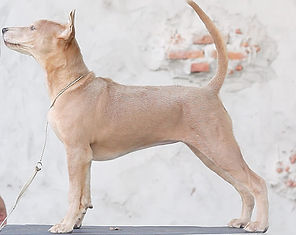
STANDARD: This coat should not exceed 2 cm in length on the tail and neck areas. Previously popular among breeders, the standard coat is becoming popular again due to its benefits over velour, particularly in Thailand, where maintaining velour-coated dogs is costly due to mosquito bites. The standard coat protects dogs from colder climates and insect bites, reducing certain skin problems, and makes the ridge highly visible.
_edited.jpg)

VELOUR: This type is softer and thicker than super velour, resembling velvet. These dogs grow a thick, dense undercoat for winter, which sheds in spring. The coat is beautiful with a clearly visible ridge and easy to maintain.